Showing posts with label Animals. Show all posts

Wednesday, March 21, 2012

Top 10 Spots For Whale Watching


Whale watching is an activity with massive worldwide appeal.  Regardless of an individual’s age and interests, tourists travel to far-flung corners of the globe to catch a glimpse of the cetaceans in their natural habitat.  The chance of seeing these majestic and awe-inspiring creatures is certainly an experience of a lifetime, so with that in mind here’s a roundup of top ten places to see these mammals out in the open seas.

10.  South Africa

southafricahumpbackwhale
South Africa’s prominent position at the southern-most tip of Africa means it is ideally positioned to see a wide variety of sea life.  The whale route along South Africa’s coastline crosses both the Indian and the Atlantic Oceans and stretches over 1200 miles, from Cape Town in the west and Durban in the east.  This section of coastline is so rich in migrating whales and dolphins that at certain times during the year you can easily see them from the shore.  Expect to see Humpback Whales and, from the shore, Southern Right Whales.  Perhaps the best place along the coast to go whale watching is Hermanus, with the best time to see the whales being from June to November.

9.  Spain

spainpilotwhale
Spain’s sprawling territories offer a few decent vantage points to spot whales, with the Bay of Biscay in the north being a top place on the mainland.  However, it is Spain’s island territories that offer the best places to catch a glimpse of the whales.  Those on their holidays to Tenerife may be surprised to learn that the south coast of the island is a haven for pilot whales and bottlenose dolphins.  The clear warm seas between Tenerife and La Gomera attract these gentle giants all year round.  There are plenty of reputable operators that provide whale spotting tours and it’s a real overlooked gem for this popular holiday island.

8.  New Zealand

newzealandwhale
The small town of Kaikoura on New Zealand’s south island has gained a reputation as a top stop off-point to spot a giant of the Sperm Whale.  Thanks to waters rich in nutrients, due to warm and cold currents clashing along with deep seas, the area has become a favourite pit stop for this big species of whale.  The whales can be seen from the shore, as well as out at sea.
An added bonus of this whale watching spot is the chance to see one of the world’s rarest and smallest dolphins, which is only found in New Zealand: the Hector Dolphin.

7.  California

californiagreywhale
The combination of sheltered bays along the Pacific Coast and the rich feeding grounds of the Sea of Cortez mean California is a superb location to see a variety of whales.  The Grey Whale is one of the most notable visitors to the Californian coast, but you’ll also see dolphins, with thousands of them visiting each year.  More than this though, California is one of the world’s best places to see the largest species of whales, the Blue Whale.  The best place to catch a glimpse of the Blue Whale is along California’s central coast between Point Reyes and the Santa Barbara Channel.  It’s probably best to take a tour at sea to see the whales rather than relying on seeing them from the coast.

6.  Azores

azoresnorthernbottlenosewhale
Somewhat marooned in the middle of the Atlantic Ocean, the nine islands that make up Azores provide one of the ultimate whale spotting destinations.  Attracting over 20 species of cetaceans from April through September, the archipelago’s remote location means it’s an integral port of call for whales crossing the ocean.  From here you can expect to see, amongst other species: Blue Whales, Killer Whales, Pilot Whales, and a variety of dolphins.  There’s also a chance of spotting the rare Northern Bottlenose Whale.

5.  Iceland

icelandminkewhales
Along the north-east coast of Iceland there are a variety of whale watching trips to hop on.  The tours are run on traditional fishing vessels which add to the sense of adventure.  On the outer edge of the Arctic Circle a trip to Iceland is recommended for the summer months, which is when you’ll see Minke Whales, Blue Whales and Humpback Whales.  In addition, for those who want to learn more about the whales that are found around Iceland, there’s a wonderful museum at Husavik’s port.

4.  Alaska

alaskakillerwhale
The thousands of Grey Whales found in California migrate north to rich feeding grounds during the summer months off of the southeast coast of Alaska.  The island channels that run along the coast of Alaska provide great places to see whales passing through on their migration.  “Whale Pass” in Ketchikan is a prime viewing spot to see the Grey Whales, along with Humpbacks and Killer Whales.  To really get up close, you can arrange a kayak tour which offers a magical experience of the whales.

3.  Norway

norwayhumpbackwhale
To visit one of the world’s best locations to see Killer Whales, then Norway is where you need to be.  The Lofoten Islands in the north of the country, inside the Arctic Circle, are where the Killer Whales pass by as they follow shoals of Atlantic Herring north, and the best time to see this is from October through January.  A journey to deeper waters means you’re pretty much guaranteed a sighting of the Killer Whales feeding in the Arctic waters.

2.  Vancouver Island

vancouverislandkillerwhales
Similar to visiting Alaska, a trip to the western side of Vancouver Island is where you’ll see migrating pods of whales of all varieties.  As with Alaska, Grey Whales dominate the sightings, but Minke and Humpback Whales are also visible. Along with this, the island is also rich in seals, sea lions, dolphins and many sea birds.  A great plus of Vancouver Island is that it is a staging post for whale researchers who offer guided tours to see the varying pods.  The tours also allow you to listen to the whales using hydrophones, which is an incredible experience.

1.  Argentina

argentinasouthernrightwhale
The protruding Valdes Peninsula is one the world’s best places to see the Southern Right Whales, along with Killer Whales.  The Southern Right Whales visit this protected area between July and December and, during this time, you can see them perform an extraordinary phenomenon of sailing in the wind using their flukes (tails).  If you visit from February to April, you can see Killer Whales hunting sea lions, which gives a great illustration of how intelligent Orcas are with organised hunting patterns.  Both species of whales can be seen from the shore at the right time of the year, with the Killer Whales hunting right up to the beach.
There are other great locations throughout the world to spot whales, and this list is just a selection of ten top places to visit.  Wherever you are in the world, near the coast, there’s usually a chance of not being too far away from seeing some of this great animals of the sea.

Tuesday, March 13, 2012

6 Misconceptions About Animals


If human have myths, legends and tales to live on, the animal kingdom can boast of some fascinating if not strange misconceptions. From angry bulls, dancing snakes to beautiful penguins, the animal kingdom is spared with misconceptions some of which comes from animated movies and cartoons. We have compiled a list so that you can know the facts.

1. Bulls are Color Blind

Bull fight is a common sport in  Spain and few other European countries, and surely is enjoyed by many millions around. Game is simple, either matador or bull makes its way out of arena in the end. It is a common misconception that the bull gets furious by the red capes held by matador that “forces” bull to run towards it. Interestingly bulls are green and red color blind! So it is not about the color but it is actually the movement of red fabric that makes the bull go wild!

2.Snakes are Deaf

You must have seen a snake charmer, at least on YouTube! Oh yes, we all know that snakes dance to the no-so-cool flute tunes. Well, here is the big catch: snakes are born deaf! The only things they react to is the vibrations received through ground. Actually it’s the vibrations not the sound that allows them to respond and make them “dance”.

3. Bats are Not Blind

Bats “are blind” and attack prey using their unique sense of hearing even during dark nights through ‘ echolocation’ – this is what most of us know already. But most species of bats are NOT blind and have excellent vision! Nocturnal fruit bat, also known as flying fox, is one of the bat species that are able to see during day light and uses its daylight vision to capture its prey. In addition, many scientists have proved that bats are able to distinguish between colors!

4. Turtle can never get out of their shells

Remember cartoon turtles leaving their shells and doing funny things? But in reality, turtles can never leave their shells! Shells are integral part of their body which is bounded with a turtle’s skeleton. So if you were planning on buying a new shell for your turtle, this surely is bad news for you!

5. Penguins do not exist only in Black and White Color

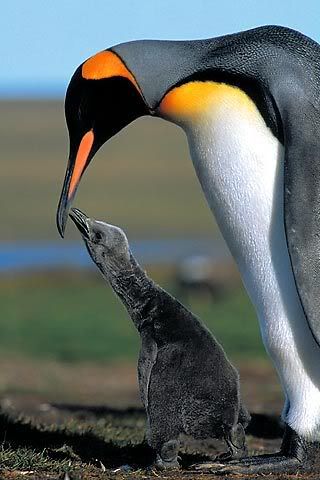
People have few misconceptions about penguins too and one of them is that they exist only in black and white color. Fact is, there are penguins with gray, blue, orange and yellow shades! Most of penguins have bright colorful feathers with really bright orange beak, pink feet or sometimes red eyes that adds unique beauty in them.  One more thing about penguins that they are not considered mammals or fish; instead they are called birds even though they can’t fly and spend all of their time on land and water.

6. Elephant do not have thick Skin

Elephants have 2 –  3 cm thick skin but only back and side skin, the rest is very sensitive! Elephants can feel even a simple touch and are sensitive to sun. This is the reason why mother elephant provides a constant shade to the babies. They even bathe in mud to protect themselves from the sun.[via green expander]

Sunday, March 11, 2012

Amazing Ice Cold Dog Rescue


Sometimes certain situations arise that require a person to think quickly in order to save someone. Read further for a story about the amazing rescue of a trapped and helpless shivering dog told by a courageous rescuer.
ice cold dog01 Amazing Ice Cold Dog Rescue

ice cold dog02 Amazing Ice Cold Dog Rescue
Recently I went outside to snap some pictures of the first snowfall, but instead ended up rescuing a dog. As I was walking around taking photos I heard water splashing and whining. After following the sounds this is what I came upon on the lake.
ice cold dog03 Amazing Ice Cold Dog Rescue
I started searching for a safe way to get closer to the water, so I could try to pull the dog out. I called out to the dog, which caused him to crawl furiously on the thin ice.
ice cold dog04 Amazing Ice Cold Dog Rescue
However, after a while he stopped and began whining again.
ice cold dog05 Amazing Ice Cold Dog Rescue
I grabbed a towrope from my car, hoping that the dog could latch onto it with its teeth.
ice cold dog06 Amazing Ice Cold Dog Rescue
Unfortunately, the rope was too short. I tried to flag down other drivers for another rope, but no one stopped. I tied my scarf and jacket to the rope to make it longer, but the dog didn’t seem to understand what I was doing. The dog was shivering uncontrollably at this point. I called rescue services and threw loose bricks at the ice to try and break it.
ice cold dog07 Amazing Ice Cold Dog Rescue
The bricks made no difference. I found a birch tree, broke it off and tossed it near the dog. The dog lurched upwards, managed to swim closer and began biting at the branches. I threw a wider piece of wood near the dog but he ignored it. Exasperated and not knowing what else to do, the dog finally managed to get his front paws over the tree branch. I caught the branch with the towrope’s hook and pulled the dog closer until the hook slid off. I waded in waist deep to try and pull out the shivering dog by its collar. Finally pulled ashore, the dog shook off and ran off without so much as a “thank you”.

Friday, March 9, 2012

The 26 Happiest Animals In The World


Have a look at these 26 ridiculously happy animals that seem to have figured everything out, the life, Universe and everything else. Hopefully, they will share some of the life wisdom with us when they’re don frolicking.

1. This Elephant

happiest animals01
Secret To Happiness: Ability to blow water out of nose; having no particular place to be.
Favorite Thing: Hurrying anyway.

2. This Squirrel

happiest animals02
Secret To Happiness: Hard work; simple, old-fashioned, American values.
Favorite Thing: Being a homeowner.

3. This Anteater

happiest animals03
Secret To Happiness: Welcomes each new opportunity with open arms and a glad heart.
Favorite Thing: Ants, probably.

4. This Elephant Seal

happiest animals04
Secret To Happiness: Good humor, kindness, relentless optimism, and a long floppy nose-like facial appendage.
Favorite Thing: Calamari.

5. This Crocodile

happiest animals05
Secret To Happiness: Lives in a river.
Favorite Thing: Probably biting things.

6. These Meerkats

happiest animals06
Secret To Happiness: Delight in companionship.
Favorite Thing: Eating small rodents.

7. This Owl

happiest animals07
Secret To Happiness: An unabashed sense of wonder at the everyday marvels that the world has to offer.
Favorite Thing: Being a little owl.

8. This Dog

happiest animals08
Secret To Happiness: An unshakeable belief that the simple things in life require all of our attention all of the time.
Favorite Thing: Drooling.

9. This Rabbit

happiest animals09
Secret To Happiness: Getting it. Just getting it.
Favorite Thing: Seeing the bigger picture.

10. This Puffer Fish

happiest animals10
Secret To Happiness: Taking life as it comes.
Favorite Thing: Being the second-most poisonous vertebrate on the planet.

11. This Seal

happiest animals11
Secret To Happiness: Lives on the beach.
Favorite Thing: Jokes.

12. This Ferret

happiest animals12
Secret To Happiness: A healthy distrust of conformity when it comes to the important things in life, like headwear.
Favorite Thing: Dressing up like an idiot, apparently.

13. This Stoat

happiest animals13
Secret To Happiness: Advanced hopping/pouncing ability.
Favorite Thing: Eating small rodents.

14. This Baby Elephant

happiest animals14
Secret To Happiness: Seeing each new challenge as an opportunity.
Favorite Thing: Rolling in trash

15. This Duckling

happiest animals15
Secret To Happiness: Buoyancy, levity, and an enviable knack for discovering joy in the little things.
Favorite Thing: Actually being one of the little things.

16. This Dog With Spaghetti On His Face

happiest animals16
Secret To Happiness: A fierce, unshakeable hopefulness paired with a realistic understanding of his place in the world.
Favorite Thing: Licking spaghetti off own face.

17. This Lamb

happiest animals17
Secret To Happiness: Constant prancing.
Favorite Thing: Constant prancing.

18. This Sloth

happiest animals18
Secret To Happiness: Strong sense of self worth.
Favorite Thing: Looking smug.

19. This Cat

happiest animals19
Secret To Happiness: A high-minded and esoteric sense of humor.
Favorite Thing: Cat food.

20. This Seal

happiest animals20
Secret To Happiness: An abiding awareness that life is a series of profound absurdities that are beyond his control and, more importantly, not his fault.
Favorite Thing: Mostly just seal stuff.

21. Boo, The Pomeranian

happiest animals21
Secret To Happiness: Seizing the day; seeing the silver lining; dressing up like a bear occasionally.
Favorite Thing: Literally everything.

22. This Owl

happiest animals22
Secret To Happiness: Ability to see the fun side of everything; ability to rotate neck 270 degrees in either direction.
Favorite Thing: Eating small rodents

23. This Dog

happiest animals23
Secret To Happiness: Persistent, unmitigated enthusiasm without context.
Favorite Thing: Interrupting.

24. This Bulldog

happiest animals24
Secret To Happiness: Stopping to smell the roses; stopping to smell everything else.
Favorite Thing: Smelling things.

25. This Rabbit

happiest animals25
Secret To Happiness: Looking adversity in the face and squawking contentedly at it.
Favorite Thing: Apartment-grade carpeting.

26. This Owl

happiest animals26
Secret To Happiness: Wisdom, grace, refinement, and a philosophical temperament.
Favorite Thing: Eating small rodents.
source

Tuesday, March 6, 2012

Born To Take A Life


Shiver… The power and energy this enormous tiger exudes is enough to make any of us wary – let alone its preferred prey. Prey animals always need to be aware of predators and hope none are nearby when they relax. It isn’t a walk in the park, so to speak, for the predators though. There is an evolutionary arms race underway that allows prey to adapt behaviors that give them a better chance before the predator can find a way to evolutionarily counteract them.
predator feast01 Born To Take A Life
This image shows two cheetahs with a gazelle which clearly lost the fight. Did it use the anti-predator behavior known as stotting? Too late to tell. Stotting is a behavior of the Thompson’s gazelle which is a particularly unusual anti-predator adaptation. The gazelle jumps as high as it can with all four legs stiff, straight up in the air, and its white rear showing. Obviously this slows its escape, but researchers have found that cheetahs in the middle of a chase will often give up when they see this stotting behavior. It seems to tell them that this is a healthy agile individual who will get away, and since there are energy costs to hunting, the predator chooses not to waste its time.

predator feast02 Born To Take A Life
This elephant may have been ill or a juvenile, as it is virtually impossible for lions or any other four-legged predator to take down an adult elephant – especially as the elephants travel in herds. It will be a feast for more than just the lions, as once they have gorged, other animals such as hyenas and vultures will come to take their turn.
predator feast03 Born To Take A Life
Clearly not all predators are big cats, though. The saddle-backed stork above is just as efficient a predator as the tiger, lion or leopard. The true predator (as opposed to a parasite who lives off its host) hunts for its prey or waits hidden and ambushes them. Some kill large prey and dismember them or take chunks, while others eat their food whole. Some use venom which starts to help digest the food before it’s even eaten, often swallowed alive. All predators, however, are efficient killing machines.
predator feast04 Born To Take A Life
The Indian python below is swallowing a whole chital deer – albeit a small one – something supposedly impossible in scientific literature, according to the photographer. But clearly the scientists were wrong. We know that snakes’ jaws are elastic, but this is incredible. The photographer says that the whole process took three hours.
Lunch for predators consists of four stages: detect their prey, attack it, capture it and consume it. Detection is not always the easiest. Many prey animals are camouflaged to escape being noticed, as are the predators in some cases. There are a number of adaptations and behaviors on both sides of this evolutionary arms race.
predator feast05 Born To Take A Life
Lion is clearly enjoying the feast of a water buffalo.
Another adaptation is aposematism, which refers to high coloration to warn of danger. You see it in poisonous tree frogs with their bright colors (and in some other species). It is so successful that other animals have adapted to mimic them: they are totally safe to eat themselves, but looking like their colored poisonous counterparts makes any predator think twice before deciding to lunch on them.
predator feast06 Born To Take A Life
Some examples of camouflage are obvious, such as that which allows animals to blend in with the savanna, while others are less obvious. A good example is the zebra’s stripes. Zebras obviously don’t blend in with the background but they do make it very, very hard for a predator to focus on one target when they are in a group: the stripes all blend in together to make a huge whole.
predator feast07 Born To Take A Life
This incredible shot is of a Dominican ground lizard eating a rat. As you can see it is almost the same size as the lizard itself. Apart from its obvious purpose, feeding predators, predation can also help get rid of pests like rats. Unfortunately, some species have been introduced to habitats specifically to get rid of pests and then overtake the habitat or ecosystem. They become the pests themselves and have caused the extinction of some species.
predator feast08 Born To Take A Life
All these images show the power of predators over prey, but they don’t show all the times that predators start to hunt, using their energy reserves to catch their lunch only to lose it. It is a hard life for both sides, but one that is balanced when man does not interfere by destroying habitats or poaching.
predator feast09 Born To Take A Life